ChatGPT Ads just got a Matched Audiences feature. Don't upload your CRM yet.
6 min read
TL;DR: OpenAI’s July 7-9 update gave ChatGPT Ads custom audience uploads (25K minimum), bid multipliers, an overview tab, and suggested ad drafts. It looks like LinkedIn Matched Audiences, and that resemblance is the trap. Run the five-gate checklist below before any CRM list touches the platform, and rebuild creative for a research surface, not a feed.
Five weeks after ChatGPT started selling ads, the targeting stack showed up. In the July 7-9 update wave, OpenAI shipped custom audience uploads, an overview tab, suggested ad drafts, and new ad formats, plus expansion into Japan and South Korea. Lists need 25K or more users, they work for inclusion or suppression, and bid multipliers can be set per audience at the ad group level.
If you have run LinkedIn or Google ads, you just recognized this. Uploaded lists, minimum thresholds, suppression, bid adjustments: it is the Matched Audiences and Customer Match playbook, ported to a new surface. And that recognition is exactly the problem, because the muscle memory it activates was trained on feeds and search results, and this is neither.
I have spent six weeks watching this platform mature from inside a demand gen budget. Here is the timeline, and then the checklist I would run before a single row of CRM data goes up.
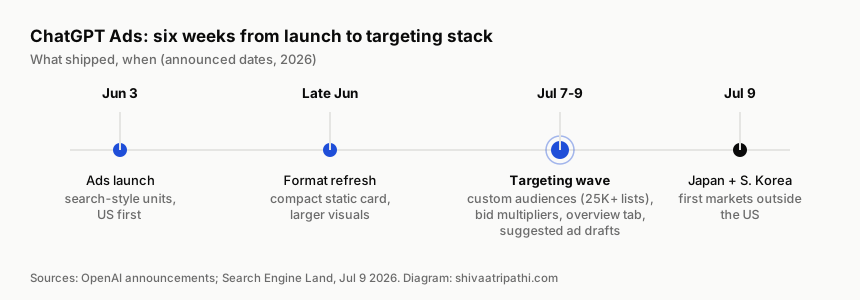
What actually shipped
Four things worth a marketer’s attention, from OpenAI’s ads documentation and the trade coverage:
Custom audiences. Upload lists of 25K+ users, include or suppress them in campaigns, set bid multipliers per audience at the ad group level. This is the headline feature and the one that will burn people.
The overview tab. Account health, recommended tasks, and a trend chart. Harmless on its face. Note that “recommended tasks” is where every ad platform eventually hides its spend-more suggestions; treat them as vendor requests, not neutral advice.
Suggested ad drafts. ChatGPT prefills an ad from your website’s existing metadata - image, title, description. Notably, OpenAI says it does not generate new copy or imagery with AI. Your OG tags just became ad creative. If your metadata is an afterthought, your auto-suggested ads will be too.
A refreshed ad format and two new markets. A more compact static card across web and mobile, and campaigns can now target Japan and South Korea - the first markets outside the US.
Why the LinkedIn instinct misfires here
The mechanics transfer. The context does not.
On LinkedIn, your matched audience is scrolling a feed, half-attentive, interruptible. The ad’s job is to stop a thumb. On Google, your customer-match audience typed a query with intent, and the ad’s job is to be the best answer. Two decades of B2B paid media craft are built on those two attention models.
A ChatGPT ad interrupts neither a feed nor a query. It sits beside a conversation, usually mid-research: someone is asking about attribution tools, or CPaaS vendors, or how to structure a rebrand. The person is in the highest-context state a buyer ever reaches, and they are talking to something that has already given them an answer. An ad that behaves like a feed interruption in that setting is not just wasted spend, it is tonally wrong in a place where tone is the whole product.
The person seeing your ad is mid-conversation with something that already answered them. Your ad is a guest in that conversation, not a billboard over it.
This changes what a “matched audience” is for. On a feed, you upload a list to chase people. Here, the first serious use is the opposite: to get out of the way. Which brings me to the checklist.
The five gates
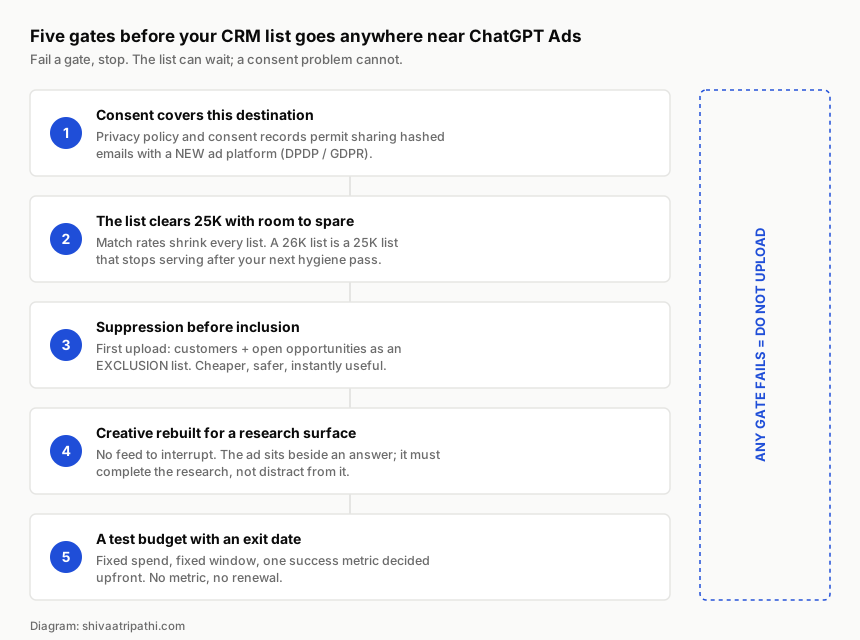
Gate 1: Consent covers this destination. Your consent records and privacy policy were written before this platform existed. Sharing hashed emails with an advertising platform is a purpose; a new platform is arguably a new processor your notices never mentioned. If you operate under India’s DPDP Act or GDPR, have the actual conversation with whoever owns privacy before the actual upload. This is the one gate where “we’ll fix it later” converts a marketing test into a compliance incident.
Gate 2: The list clears 25K with margin. The minimum is 25K users, and every uploaded-list product loses a slice to matching. A list that squeaks past the minimum today is a list that silently stops serving after your next data hygiene pass. If your total addressable CRM is 30K contacts, this feature is not for you yet - and that is a fine answer. B2B lists in most non-US markets will fail this gate more often than US-centric commentary assumes.
Gate 3: Suppression before inclusion. The first list that should ever touch a new ad platform is the exclusion list: current customers, open opportunities, active support escalations. It is the cheapest test of the entire matching pipeline (if your customers still see the ads, the plumbing is broken), it immediately stops the most embarrassing impressions, and it produces value even if you never run an inclusion campaign. Chasing named accounts comes later, if ever.
Gate 4: Creative rebuilt for the surface. The suggested-drafts feature will happily build you a feed ad from your metadata. Resist it, at least for now. An ad beside a research conversation should complete the research: name the category plainly, state who the product is for, make the next step a low-commitment read rather than a demo form. Write it the way you would answer a smart colleague’s question, because that is literally the adjacent content.
Gate 5: A test budget with an exit date. Decide the spend, the window, and the single metric before the campaign exists. Given that this surface is five weeks old, the honest metric is directional: qualified traffic or branded-search lift from exposed audiences, not pipeline attribution you cannot yet measure cleanly. No pre-agreed metric, no renewal. Platforms in land-grab mode reward discipline and punish enthusiasm.
The meta-signal, since it is bigger than the feature
Reread that timeline. Launch to custom audiences in five weeks. Google took years to walk this path; LinkedIn took most of a decade. OpenAI is compressing the entire ad-platform maturity curve into a quarter, which tells you two things: they are pointing this at performance budgets, not experimental ones, and the feature set you evaluate today will be stale by Diwali. Whatever you decide this month, put a recurring hold on your calendar to re-decide next quarter.
It also means the platform’s measurement, brand safety, and audience tooling are all younger than your intern’s tenure. The 25K minimum, the geography list, the formats - all of it is provisional. Build your process (the five gates) rather than your strategy around the current feature set, because the feature set will not sit still.
The last platform shift like this, I wrote about where the money showed up before the measurement did. Five weeks in, that is still the theme: the targeting arrived, the measurement discipline has to be yours.